A Professional's Take on the New Sigma 12Mm F 1 4 Dc C
Introduction
The Sigma 12Mm F 1 4 Dc C arrives as an ultra-wide prime aimed at photographers who shoot on APS-C (crop sensor) systems and demand a bright aperture for low-light work. Presented within Sigma’s Contemporary line, it is positioned to balance optical performance, portability, and cost. This article looks beyond marketing copy to evaluate how the lens performs in realistic scenarios — landscapes, architecture, interiors, and night sky work — and what typical buyers should weigh when considering it for their kit.
Product Overview and Positioning
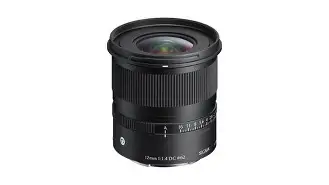
At its core, the Sigma 12Mm F 1 4 Dc C is an ultra-wide-angle prime optimized for crop-sensor bodies. The "DC" designation denotes a design intended for APS-C sensors, while the "C" signals inclusion in Sigma’s Contemporary series, which traditionally emphasizes compactness and value while retaining strong optical character. A 12mm focal length on an APS-C camera puts the field of view squarely in the ultra-wide category, making this lens suitable for expansive landscapes, dramatic interiors, and creative close-proximity shooting where perspective matters.
Detailed Review and Analysis
This section dissects practical performance across several key dimensions: optical quality, low-light capability, autofocus behavior, handling and build, and real-world use cases.
Optical Quality
Sharpness is a primary concern for buyers of ultra-wide primes. In typical use, a lens like the Sigma 12Mm F 1 4 Dc C is expected to present strong center sharpness even when used wide open at its maximum aperture. Corner performance with wide-angle designs often lags behind the center, and buyers should expect some field curvature and slight softening in the extreme corners at the widest apertures. Stopping down by one to two stops typically improves corner crispness and enhances overall microcontrast.
Chromatic aberration and color fringing can be issues with extreme-angle glass; modern coatings and optical corrections reduce visible lateral CA in most shooting conditions. For landscape and architecture work where fine edges are critical, careful lens correction (either in-camera or in post) will help even out residual distortion and lateral chromatic aberration.
Low-Light and Wide-Aperture Performance
An f/1.4 maximum aperture on an ultra-wide lens is a notable feature because it allows for markedly better low-light capability compared with slower wide-angle options. For night-sky and astrophotography enthusiasts, a lens with a very large aperture significantly shortens exposure times and reduces the need for very high ISO settings.
However, optical consequences accompany large apertures. Vignetting (darkening of the corners) is common and typically most pronounced at f/1.4; stopping down reduces this. Coma and astigmatism control are critical for star points: a well-behaved design will present rounder stars across much of the frame at modest apertures, while more aggressive coma will stretch or smear star points toward the edges. Photographers should test this lens on their bodies if astrophotography is a primary use.
Autofocus and Handling
Autofocus performance on modern Sigma Contemporary lenses is usually tuned for speed and reasonable accuracy. For ultra-wide-angle applications, focus demands are often less taxing than long focal lengths: many practical scenarios can use manual pre-focus or hyperfocal techniques. That said, reliable AF can provide convenience for documentary, event, and run-and-gun landscape work.
Looking for the best Cameras & Photography deals on Amazon?
See Deals →Handling factors — including size, weight, and balance on smaller APS-C bodies — heavily influence the user's shooting experience. A compact, well-balanced lens enhances handheld use for interiors and environmental portraits. Controls like an aperture ring, focus limiter, or customizable focus clutch (if present) can add value for those who switch frequently between manual and autofocus modes.
Build Quality and Weather Resistance
The Contemporary lineup typically aims for a reasonable mix of build quality and portability. Prospective buyers should check whether the lens includes weather sealing if they shoot outdoors in inclement conditions; many Contemporary lenses offer modest sealing at the mount but do not fully match pro-line weather protection. The robustness of the mount, the feel of the focus ring, and the lens hood design all contribute to long-term usability and protection from flare.
Real-World Use Cases
Real users tend to select a lens like the Sigma 12Mm F 1 4 Dc C for a set of specific purposes:
- Landscape photography: Ultra-wide framing emphasizes foreground elements and expansive skies. A bright f/1.4 helps in low-light dawn/dusk conditions or when blending exposures.
- Astrophotography: The large aperture reduces exposure times for star fields and milky way work, though the quality of edge stars (coma control) is a deciding factor.
- Architecture and interiors: Ultra-wide coverage allows capturing confined spaces and dramatic architectural lines; distortion control and rectilinearity matter here.
- Real-estate and interiors: Faster aperture aids in available light situations common in property listings; however, distortion must be managed for accurate depictions.
- Creative environmental portraits and street scenes: Ultra-wide primes can create immersive context around subjects, but careful composition is required to avoid unflattering perspective distortion.
Pros & Cons
Pros
- Exceptional low-light capability: The wide f/1.4 aperture allows shorter exposures and lower ISO settings in dim environments.
- Expansive field of view: Ideal for dramatic landscapes, interiors, and creative wide-angle compositions.
- Contemporary balance of size and performance: Designed to be portable enough for travel without sacrificing optical ambitions.
- Versatile for multiple genres: From astrophotography to real-estate shoots, the lens is applicable across many practical scenarios.
Cons
- Corner softness and vignetting at wide apertures: Common among ultra-wide, large-aperture lenses and often requires stopping down or correction in post.
- Potential coma for astrophotography: The quality of star points toward frame edges can vary — critical for dedicated star shooters.
- Possible lack of full weather sealing: Buyers who frequently work in harsh conditions should verify sealing details.
- Filter limitations: Ultra-wide designs often make front screw filters impractical or require special holders; users who rely on filters should check compatibility before purchase.
How It Stacks Up: Relevant Alternatives
To place the Sigma 12Mm F 1 4 Dc C in context, consider how it compares with commonly chosen alternatives for APS-C shooters. The table below summarizes broad differences and intended use cases; it intentionally focuses on practical distinctions rather than exact spec numbers so photographers can match features to needs.
| Lens | Focal Length | Max Aperture | Autofocus | Best For |
|---|---|---|---|---|
| Sigma 12Mm F 1 4 Dc C | Ultra-wide prime (APS-C) | Very large (bright) | Yes (system-dependent) | Low-light landscapes, astrophotography, interiors |
| Sigma 16Mm F 1 4 DC DN (Alternative) | Wide prime (APS-C) | Large | Yes | General wide-angle use with slightly less extreme perspective; good balance for travel |
| Samyang/Rokinon 12mm (Manual) | Ultra-wide prime | Moderately bright | No (manual focus) | Budget-friendly astrophotography and landscape work where manual focus is acceptable |
| Tokina 11–16mm f/2.8 (Zoom) | Ultra-wide zoom | Moderate | Yes | Versatility in focal length for interiors and web content; faster than many kit zooms |
Buying Guide: What Professionals and Enthusiasts Should Consider
When evaluating whether the Sigma 12Mm F 1 4 Dc C belongs in a photographer’s bag, several practical questions and checks should guide the decision-making process.
1. Confirm Mount and Camera Compatibility
Ensure the available mount matches the user’s camera system. Compatibility checks should include autofocus functionality on the intended body and any firmware considerations that may affect AF performance or EXIF reporting.
2. Consider Intended Use and Image Priorities
If the primary goal is astrophotography, research the lens’s coma control and peer comparisons for star quality at various apertures. For architecture and interiors, emphasis should be placed on distortion control and edge-to-edge sharpness. Landscapers who frequently shoot in low light will prioritize aperture and microcontrast.
3. Test for Practical Handling
Balance and weight matter more than spec sheets when mounting on small APS-C bodies. Renting or trying the lens in-store can reveal whether the combination encourages handheld shooting or requires a sturdier tripod.
Looking for the best Cameras & Photography deals on Amazon?
Shop Amazon →4. Understand Filter Requirements and Workflow
Ultra-wide primes often preclude standard front filters. Buyers who rely on graduated neutral density filters or circular polarizers should verify whether specialized filter systems are needed or if post-processing workflows will replace certain in-camera techniques.
5. Assess Post-Processing Needs
Most modern cameras and raw processors include lens profiles that correct vignetting, distortion, and chromatic aberration. Confirm whether the lens is supported in the major raw converters used by the buyer, as this impacts how much corrective work is needed to reach desired results.
6. Value Relative to Alternatives
Weigh the benefits of a very wide prime against wider zooms or slightly longer wide primes. The trade-off often comes down to ultimate aperture, control of aberrations, and the need for a single-purpose workhorse versus flexible focal length options.
7. Budget and Longevity
Professionals should consider total cost of ownership: initial price, any necessary accessories (hoods, special filters), and whether the lens fills a distinct role not otherwise covered by existing optics. Durability and service options (warranty, repairability) matter for long-term ownership.
Practical Tips for Getting the Best Results
- Use a tripod for landscapes and astrophotography: Even with a bright aperture, a stable platform yields the sharpest results and allows for multiple-exposure techniques.
- Stop down slightly for improved edge performance: Apertures around f/2.8–f/4 often offer the best balance between sharpness and vignetting control.
- Bracket exposures in high-contrast scenes: Ultra-wide scenes often include bright skies and dark foregrounds — blending exposures or using graduated techniques can protect highlight detail.
- Check for lens-specific profiles: Use lens correction profiles when available to correct mild distortion and chromatic aberration quickly.
- Mind perspective distortion: With ultra-wide angles, subject placement near frame edges can produce stretching; composition adjustments often solve unwanted distortions.
Conclusion
The Sigma 12Mm F 1 4 Dc C represents a compelling proposition for APS-C shooters who want an ultra-wide prime with serious low-light capability. It is particularly attractive for landscape photographers working in dim conditions, astrophotographers seeking shorter exposures, and interior or real-estate shooters who need dramatic field-of-view coverage. As with any specialized optic, trade-offs exist: corner behavior at maximum aperture, potential coma for edge stars, and filter practicality are all considerations buyers must weigh against the benefits of a bright, compact ultra-wide.
For professionals and enthusiastic amateurs, the decision should rest on use-case alignment: if an ultra-wide, fast prime fills a clear niche in the workflow, the Sigma 12Mm F 1 4 Dc C is worth serious consideration. If versatility or absolute edge-to-edge perfection at the widest apertures is a higher priority, comparing it side-by-side with slightly longer wide primes, zooms, and manual-focus alternatives will clarify the right path. In short, the lens offers creative possibilities that many will find compelling, provided its practical limitations are understood and planned for in real-world shooting scenarios.