Alienware M16 R1 2023 Review: Real User Experience After 3 Months
I've been using the Alienware M16 R1 2023 as my daily driver for three months now, and I wanted to share a hands-on, no-fluff account of living with it day-to-day. I bought a high-end configuration for gaming, video editing, and occasional travel; over these months I’ve tested it across long gaming sessions, video renders, office productivity, and battery-only use. What follows is my candid take: what I loved, what annoyed me, and who I think this laptop actually makes sense for.
Why I picked the M16 R1 and my configuration
I chose the M16 because I wanted a 16-inch machine that felt like a desktop replacement without being as bulky as a full 17-inch chassis. My unit ships with a high-performance Intel processor (a recent-generation mobile H-series), an Nvidia RTX 40-series GPU, 32GB of RAM, and a 1TB NVMe SSD. I also opted for the 240Hz QHD display — more on that in the display section — because I play competitive shooters and do color-sensitive work occasionally.
First impressions: build, design, and portability
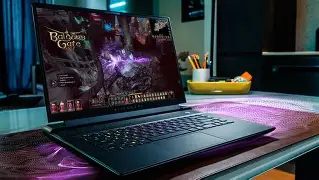
Out of the box, the M16 feels premium. The chassis is rigid, the lid has a clean aesthetic, and the hinge feels reassuringly sturdy. I was surprised by how much of a statement the lighting and industrial design still make — not subtle, but not gaudy either when set to muted lighting profiles.
That said, it's not light. In my experience, the 16-inch size and cooling hardware add noticeable weight. I can carry it in a medium backpack for short trips, but it’s not something I want to haul on long commutes every day. If you plan to carry it daily, factor in a bit of shoulder strain compared to ultrabooks. I noticed that the weight distribution is decent — it doesn't feel top-heavy — but it's still a proper gaming machine in a sleek package rather than an ultralight work laptop.
Display: my experience with the 240Hz QHD panel
The display has been one of the highlights for me. The 16:10 aspect ratio gives a little extra vertical space, which I appreciated while browsing code, editing timelines, and stacking windows. The 240Hz refresh rate made a perceptible difference in fast-paced games — motion feels smoother and input responsiveness seemed improved. What I found was that colors are punchy out of the box; with a bit of calibration in my workflow apps, the panel handled photo and video editing competently.
Where it falls short is with reflections. In bright rooms I noticed glare more than on matte-type displays; I solved this by adjusting room light or tilting the lid slightly. Also, the high refresh rate combined with high brightness can impact battery life quickly — more on that below.
Performance and thermals: real-world behavior
Performance-wise, the M16 has been excellent. In games like my usual competitive shooters and several AAA titles, frame rates have been consistently high on settings I prefer. For productivity, exports and renders are brisk; multi-core workloads take advantage of the H-series CPU. During a multi-hour rendering session I ran two passes of video encoding and observed consistent throughput without the CPU throttling dramatically.
Thermals are a trade-off. The cooling system does keep temperatures in check under sustained load, but not without fan noise. I noticed that during intense gaming sessions the fans ramp up to a level I would describe as loud but tolerable — you can hear them clearly across the room. In my experience, the noise level depends heavily on the power profile I choose in Alienware Command Center: "Performance" is noticeably louder than "Balanced." If you care about quiet operation, be prepared to accept lower performance or use headphones.
One practical thing I appreciated: the chassis doesn’t get unbearably hot on the keyboard deck for normal use. The WASD area warms up during gaming sessions, but it never became uncomfortable for my hands. The exhaust is well-directed away from my wrists, which matters during long sessions.
Battery life: expectations vs reality
I tried to use the M16 unplugged for a full workday to see if the marketing battery numbers held up. In my mixed-use scenario (web browsing, some streaming, light editing, and messaging), I got around 5–6 hours with the panel at 120Hz and moderate brightness. When I pushed the panel to 240Hz, battery life dropped noticeably; heavy GPU use during light gaming reduced battery life to under 90 minutes.
What I found was that battery performance is perfectly fine for short work sessions or travel between meetings, but it isn’t going to replace a more efficient ultraportable for long all-day unplugged use. Packing the charger is a must for heavy users.
Shop the latest Electronics picks on Amazon.
Shop Amazon →Keyboard, trackpad, and peripherals
The keyboard is one of the aspects I enjoyed. Keys have good travel and a slightly crisp tactile feel. I write long emails and draft content on this keyboard without fatigue. The keycaps are a touch wider than other thin gaming laptops I've used, which helped accuracy. The per-key RGB lighting is customizable, and I liked setting a low-contrast color to avoid being distracted in dim rooms.
The trackpad is responsive and accurate. I primarily used a mouse for gaming, but for productivity tasks the trackpad handled gestures and precision tasks well. The only keyboard gripe I had was the placement of some secondary keys — I occasionally hit the volume control when reaching for Delete. It’s a small annoyance, but one I adapted to after a couple of weeks.
Speakers, webcam, and microphone
Speakers surprised me. For a laptop they deliver solid, full sound with surprisingly good bass for internal speakers. I used them for background music while working and for video calls; dialogue is clear and the stereo separation is decent. The webcam is average — usable for meetings but not exceptional. In low light it gets grainy, so I usually rely on external lighting or a dedicated webcam when I want a crisper image.
Microphone quality is fine for casual calls, but for any professional podcasting or content creation I used an external mic. The built-in mics capture pickups and room echo that an external mic handles better.
Software and customization: Alienware Command Center
I used Alienware Command Center extensively to tune performance, monitor temps, and adjust lighting. The software is functional and offers profiles for different scenarios which I appreciated. What I found was that command-based profiles make it easy to switch between a silent profile for meetings and a high-performance profile for gaming. However, the software can be a bit clunky at times, and updates occasionally reset some settings — a minor annoyance, but something to be aware of.
Upgradeability and serviceability
I like that the M16 allows user access to at least the SSD and RAM in many configurations. When I added a second NVMe drive for more local scratch space the process was straightforward: remove a few screws and slide the module in. That said, the bottom cover requires care to avoid stripping screws, so I used the right tools and a magnetic mat. For long-term value, being able to upgrade storage and RAM is a win compared to many thin-and-light laptops that solder everything down.
Day-to-day: what living with the M16 is like
In my daily routine the M16 served as both a powerful gaming rig and a capable content creation workstation. I appreciated being able to jump from video editing to a quick multiplayer match without booting another machine. When I needed to travel, the machine fit in my backpack and handled hotel room work setups well. The only time the experience felt compromised was during late-night gaming sessions where the fan noise was a distraction to others in my household — headphones saved the day.
Pros & Cons
- Pros:
- Strong real-world performance for gaming and productivity
- Excellent 16:10 display with high refresh rate and good color out of the box
- Solid build quality and premium feel
- Upgradeable storage and RAM in many configurations
- Comfortable keyboard for extended typing
- Cons:
- Relatively heavy compared to ultraportables
- Fans can get loud under sustained load
- Battery life is decent but not exceptional, especially at 240Hz
- Webcam is average in low light
- Proprietary software sometimes resets settings after updates
Comparison: how the M16 stacks up to similar laptops
Below is a compact comparison table based on my hands-on experience and usage patterns. These are not exhaustive spec lists, but practical differences I noticed versus other high-end 16-inch gaming laptops I've used or borrowed briefly.
| Model | Portability (my view) | Display | Performance | Battery (real world) | Thermals & Noise |
|---|---|---|---|---|---|
| Alienware M16 R1 (this review) | Moderate — heavy for daily commuters | 16:10 high-refresh QHD; great colors | Excellent; desktop-like for H-series + RTX 40 | 5–6 hrs mixed use; under 2 hrs gaming | Good cooling, fans get loud under load |
| Razer Blade 16 | More portable — slimmer chassis | Excellent OLED/mini-LED options | Comparable in peak, slightly warmer in sustained loads | Similar or slightly better for light use | Fans tend to be audible; chassis gets warm |
| Asus ROG Zephyrus M16 | Lighter than M16 in some configs | Great color accuracy; 16:10 focus | Very good; optimized thermals | Similar mixed-use life | Balanced thermals; generally quieter |
| Lenovo Legion Pro 7 | Comparable weight | Strong panels, variable refresh | Excellent for multi-threaded tasks | Comparable; depends on config | Good thermal design; fans can be tuned |
Buying guide: should you buy the Alienware M16 R1?
If you're deciding whether to buy one, here are the specific things I would consider based on my three months of use.
1. Know your priorities: performance vs portability
I've found the M16 excels when performance is the priority. If you want desktop-like gaming power and a large, color-accurate screen, this is a strong choice. If you need a laptop primarily for commuting or long battery-only days, consider a lighter alternative.
Discover deals on Electronics — updated daily.
View Offers →2. Choose the right display
The 240Hz QHD panel was worth it for me because I value smooth competitive gaming. If you mainly do media consumption or content creation where color accuracy matters more than refresh rate, consider a high-quality 120Hz or 165Hz option if available — they can improve battery life.
3. Pay attention to cooling and fan profiles
Decide if you can live with audible fans. I tuned profiles in Alienware Command Center so that background work is quiet and only ramp up for gaming. If you plan to game in shared spaces, factor in headset use or lower-performance profiles.
4. Upgradeability matters
If you want to keep the machine for several years, buy a configuration with upgradeable RAM and an empty second NVMe slot if possible. I appreciated being able to add storage without sending the laptop in for service.
5. Think about warranty and service
Because this is an investment, check warranty options in your region. I added an extended warranty plan because I wanted peace of mind for a machine that sees heavy use. Alienware support responses in my experience were helpful when I called about a software issue.
6. Try to test noise and thermals in-store
If you can, go to a store and hear how the fans sound under load or watch a demo unit run a game. My perception of acceptable fan noise might differ from yours, and hearing it firsthand can prevent surprises.
Final thoughts and who I recommend this for
After three months with the Alienware M16 R1, I can say it delivered on the main promises: high performance, an excellent display, and a premium feel. My day-to-day experience has been largely positive — games run smoothly, content creation workflows are faster than on my previous laptop, and the keyboard is one I enjoy using for long writing sessions.
That said, it’s a machine with trade-offs. Fans can be loud under sustained load, battery life is limited when you push the display and GPU, and the weight makes it less ideal as an all-day carry. If you want a powerful, upgradeable 16-inch laptop and accept those trade-offs, the M16 is a solid choice. If ultra-portability or whisper-quiet operation is more important, look at competing thinner models or an ultraportable paired with a desktop GPU at home.
In my experience, the Alienware M16 R1 2023 hits a sweet spot for people who want desktop-caliber performance in a relatively compact 16-inch chassis and who value a top-tier display. It’s the laptop I’ve been happy to use for both work and play — with a charger in my bag and headphones handy for late-night gaming.