Don't Buy the Alienware Aw3420Dw Until You Read This Full Analysis
Short verdict: The Alienware Aw3420Dw is a distinctive ultrawide that prioritizes gaming feel and design over a perfectly balanced all‑round performance profile. For competitive and immersive gamers who value a curved IPS ultrawide with Nvidia adaptive sync and low-latency behavior, it still has appeal. For color‑critical creators, those who want flawless HDR or the best productivity real estate per dollar, there are caveats to weigh carefully. Read on for a full breakdown of strengths, weaknesses, and who should — and should not — consider this monitor.
Introduction
Ultrawide monitors have become a popular middle ground between standard 16:9 panels and ultra‑high resolution options. The Alienware Aw3420Dw (Alienware AW3420DW) entered the market with a focus on gaming immersion, a steep curve and a striking industrial design. As with many niche monitors that emphasize a particular use case, expectations vary by buyer. This analysis explores how the Aw3420Dw performs in real‑world scenarios — gaming, content creation, work, and mixed use — and highlights practical considerations buyers typically care about: image quality, gaming performance, ergonomics, connectivity, and long‑term ownership issues such as calibration and warranty.
Detailed Product Review and Analysis
Design and build
The Aw3420Dw has an unmistakable Alienware aesthetic: aggressive lines, a robust stand and integrated lighting accents. The build quality feels premium, and the stand provides height, tilt and swivel adjustments that are useful for desk setups. The curved screen wraps the view in a way that many users find more immersive than flat ultrawides, especially for racing, flight sims and single‑player RPGs.
Panel characteristics and image quality
At its core, the monitor is a 34‑inch ultrawide with a 3440×1440 resolution. The panel technology is an IPS‑type, which typically means wide viewing angles and generally strong color reproduction out of the box. In practice, buyers should expect good vibrancy and a natural look for movies and games. That said, the panel is tuned predominantly for gaming: contrast and HDR highlights are not as pronounced as on high‑end VA panels or displays specifically engineered for HDR content. Users who plan to do professional photo or video grading should plan on calibrating with a colorimeter; out‑of‑the‑box color is good for general content but may fall short of studio targets without profile adjustments.
Gaming performance
This is where the Aw3420Dw aims to shine. With a high refresh rate (native 100–120Hz class) and support for Nvidia adaptive sync technology, the monitor delivers smooth frame pacing when paired with a capable GPU. Input latency and pixel response times are engineered to be competitive, which is meaningful for fast‑paced multiplayer titles. The curvature enhances peripheral immersion, and ultrawide aspect ratios give extra horizontal field of view in many modern titles that support it.
However, pure competitive players who prioritize absolute minimum input latency and maximum frame rates may prefer 16:9 240Hz+ panels. For those players, the wider field of view and immersion of 3440×1440 must be balanced against the lower peak refresh rate compared with top‑end 1080p or 1440p esports monitors.
HDR and brightness
Unlike dedicated HDR displays with local dimming zones, the Aw3420Dw offers a modest HDR experience. HDR content appears improved compared with SDR in terms of color and perceived depth, but it does not produce the same dramatic highlight detail and deep blacks as monitors with strong backlighting and zone control. For buyers whose priority is cinematic HDR or HDR grading, a monitor specifically designed for HDR1000 or with FALD is a better option.
Uniformity, glow and real‑world artefacts
Like many IPS panels, the Aw3420Dw can display IPS glow in dark scenes, which is most visible in dim rooms or when viewing dark content at night. Backlight uniformity is generally acceptable, but some units exhibit slight clouding or unevenness; this is a common variability point across production batches. Buyers sensitive to any non‑uniformity should test a unit in person when possible or verify return policies for exchanges.
Connectivity and ergonomics
Ports include display inputs (DisplayPort and at least one HDMI), as well as a USB hub for peripherals. The stand's adjustability is a practical strength; it lets users dial in a comfortable viewing angle for long sessions. The OSD (on‑screen display) menus are feature‑rich, with preset modes for different game genres and color profiles. Some users find the menu system cluttered at first, but it provides useful control once learned.
Discover deals on Electronics — updated daily.
Browse Now →Software, lighting and extras
Alienware's lighting system adds visual flair and syncs with other peripherals for a cohesive look. The accompanying software allows profile management and lighting adjustments. While fun, buyers who dislike extra software layers should know settings can also be managed directly through the hardware OSD.
Pros & Cons
- Pros
- Immersive 34" ultrawide curve ideal for single‑player immersion and cockpit sims
- IPS panel with vibrant colors and wide viewing angles
- High refresh rate and Nvidia adaptive sync for smoother gameplay
- Solid build quality and ergonomic stand adjustments
- Distinctive Alienware styling and configurable lighting
- Cons
- HDR performance is limited compared with displays that have local dimming
- IPS glow and occasional uniformity issues on some units
- Not the cheapest option for ultrawide performance per dollar
- Lower peak refresh than competitive esports monitors (16:9 240Hz+)
- Color accuracy may require calibration for professional work
How the Aw3420Dw Compares (Quick Table)
| Model | Panel type (typ.) | Resolution | Refresh rate (typ.) | Adaptive Sync | Best for |
|---|---|---|---|---|---|
| Alienware Aw3420Dw | IPS‑type | 3440 × 1440 | ~100–120Hz | Nvidia G‑SYNC (adaptive) | Immersive single‑player gaming, cockpit sims, ultrawide media |
| LG 34GP (e.g., 34GP83/34GN850) | Nano IPS | 3440 × 1440 | 144Hz+ | G‑SYNC Compatible / FreeSync | Faster ultrawide gaming with vibrant colors |
| Samsung Odyssey (e.g., G9) | VA | 5120 × 1440 (super ultrawide) | 240Hz+ | G‑SYNC/FreeSync | Extreme immersion, high contrast, large desk setups |
Real‑World Use Cases
Single‑player and immersive gaming
For single‑player experiences, the Aw3420Dw delivers a strong sense of presence. The ultrawide field of view and curvature add depth to open worlds, driving sims and flight titles. The monitor's color and sharpness help scenes look more cinematic, and adaptive sync reduces tearing at moderate frame rates.
Competitive multiplayer
Competitive players should consider priorities: the Aw3420Dw is responsive and capable, but it does not reach the extreme refresh rates (240Hz+) that some esports players prefer. If absolute frame‑rate advantage and minimal motion blur are the primary goals — and the game supports narrow aspect ratios well — a 16:9 high refresh esports monitor may be a better choice.
Content creation and productivity
The ultrawide aspect is excellent for timeline workflows (video editors) and multitasking, allowing side‑by‑side windows without needing multiple monitors. However, color‑critical creators will want to calibrate and verify the monitor's gamut and uniformity; while usable for general editing, it may not match dedicated professional displays that target wide color gamuts with hardware validation and exceptional uniformity.
Office and mixed use
For everyday productivity and multimedia consumption, the monitor is comfortable for long sessions due to the ergonomic stand and large workspace. The curve can be a personal preference — some users find curved screens more natural for a single dominant display, while others prefer flat panels for color accuracy and multi‑monitor setups.
Buying Guide: What to Consider Before Purchasing
1. Intended primary use
Buyers should decide whether gaming immersion, competitive performance, or content creation is the primary objective. The Aw3420Dw leans toward immersive gaming with a solid all‑round performance, but it is not the top choice for HDR mastery or pro‑level color grading.
2. GPU capability and performance expectations
3440×1440 at high refresh requires a powerful graphics card to fully utilize in modern titles. If the buyer plans to play at native resolution with high settings, pairing the monitor with a mid‑ to high‑end GPU will deliver the best experience. For owners of older or lower‑powered GPUs, consider whether lower settings or reduced frame targets are acceptable.
3. Desk space and ergonomics
Confirm desk depth and monitor arm compatibility. The curved 34" panel needs comfortable viewing distance to maximize the immersive effect. The stock stand offers flexibility, but buyers who prefer different mounting options should verify VESA compatibility.
Find top-rated Electronics products at great prices.
See Deals →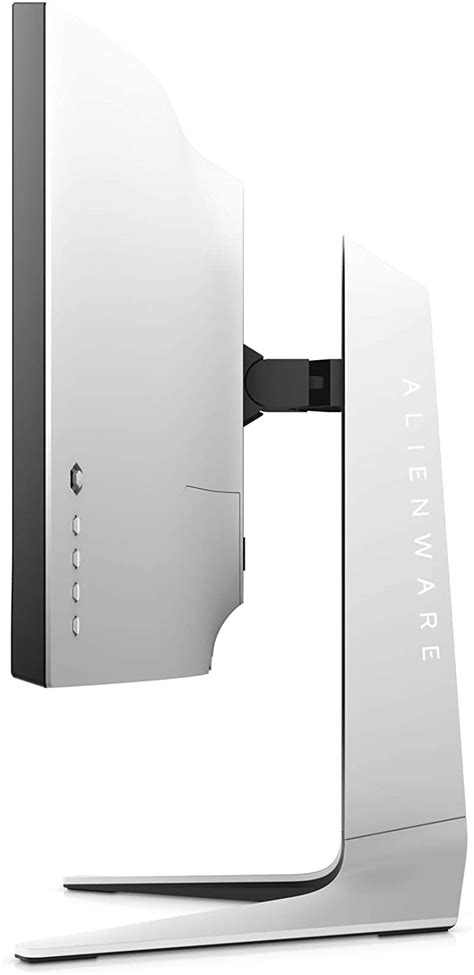
4. HDR expectations
If HDR is important, understand the level of HDR intended. The Aw3420Dw provides an enhanced HDR experience over SDR, but it does not deliver the deep contrast and blooming control of monitors with significant local dimming arrays. For HDR viewing as a primary goal, evaluate monitors explicitly rated for high HDR performance.
5. Color work and calibration
Content creators should plan to use a hardware colorimeter to calibrate the panel if they need professional accuracy. Check reported coverage of sRGB, Adobe RGB and DCI‑P3 for the specific model; calibration will improve consistency but will not solve inherent gamut or uniformity limits.
6. Return policy and warranty
Given unit variability in uniformity and potential early defects (backlight bleed, dead pixels), purchasing from a seller with a lenient return policy and a robust warranty is pragmatic. Keep proof of purchase and register the product if the manufacturer offers extended support.
7. Alternatives and price sensitivity
Compare the Aw3420Dw to other ultrawides and curved options. If the buyer prioritizes refresh rate beyond 120Hz at ultrawide resolution, consider newer Nano‑IPS models that offer 144Hz+ and similar color performance. If deep contrast and HDR are top priorities, look at high‑end VA or HDR‑certified monitors instead.
Practical Tips for Buyers and New Owners
- Test in‑store if possible: Seeing the curvature, checking for uniformity, and evaluating the OSD in person reduces surprise after purchase.
- Calibrate: Use a colorimeter for content work to achieve more consistent results across devices.
- Optimize settings: Try different game and OSD presets; many titles have ultrawide support toggles that affect UI scaling and FOV.
- Plan for desks and peripherals: Ultrawide real estate often reduces the need for dual monitors, but peripheral positioning (keyboard, mouse, speakers) should be considered carefully.
- Check firmware updates: Manufacturers sometimes release firmware to fix issues; keep the monitor updated through official channels.
Conclusion
The Alienware Aw3420Dw remains a compelling option for users who prioritize immersive ultrawide gaming and a premium, feature‑rich design. Its strengths are clear: curvature and screen size that enhance immersion, IPS‑type color performance that is pleasing for games and media, and gaming‑oriented features such as adaptive sync and responsive behavior. But these strengths come with tradeoffs that matter depending on the buyer's priorities: HDR is not class‑leading, IPS glow and uniformity variability can affect dark‑scene viewing, and it is not the optimal choice for competitive players who demand the highest possible refresh rates or for creatives who require unconditional color precision without calibration.
Ultimately, the decision to buy the Aw3420Dw should come after weighing the real‑world use cases described here. If immersive single‑player gaming and a visually striking monitor are primary goals, it’s worth serious consideration. If the buyer’s needs skew toward professional color work, extreme HDR, or the fastest competitive gameplay, exploring other models with stronger specialization in those areas is advisable. Careful comparison, testing where possible, and consideration of calibration and warranty will help ensure the chosen monitor fits the buyer’s specific workflow and expectations.