Spec Battle: Beelink Me Mini Nas Mini Pc vs Contour Design Unimouse — Is It Worth Upgrading?
Category: Laptops
Introduction
Upgrading hardware can be a deceptively complex decision: a single purchase can improve productivity, reduce friction, or simply feel like an unnecessary expense. This article examines two very different upgrade paths that many users consider when refreshing a workstation or home office setup — the Beelink Me Mini NAS Mini PC, a compact small-form-factor computer with NAS-oriented features, and the Contour Design Unimouse, an ergonomic pointing device aimed at reducing discomfort and increasing precision. Rather than simply listing specs, this piece evaluates real-world value: what everyday users, remote workers, creatives, and home-lab hobbyists typically care about, how each product performs in those contexts, and whether upgrading is worth the cost and effort.
Why compare a mini PC and an ergonomic mouse?
At first glance, a mini PC and an ergonomic mouse seem incomparable. The comparison here is intentional: many buyers ask whether to invest in core compute upgrades (better machine, more local storage, server features) or in input/peripherals (ergonomics, accuracy, comfort). Both upgrades affect productivity and long-term wellbeing, but in different dimensions. Evaluating them side-by-side helps prioritize spending based on actual needs and daily pain points.
Product analysis
Beelink Me Mini NAS Mini PC — What it brings to a modern desk
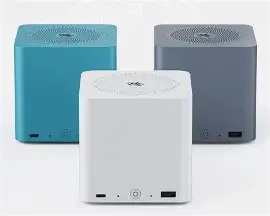
The Beelink Me Mini NAS Mini PC targets users who want a compact, low-noise computing device that doubles as a lightweight NAS or home server. Its appeal is in consolidation: a single box that handles light workstation duties, media serving, file storage, and occasional server tasks without the footprint or heat of a tower.
Key strengths are the small form factor, energy-efficient processors appropriate for 24/7 operation, and flexible storage options. For many buyers, the ability to attach one or more internal 2.5" drives or M.2 SSDs and to expose network storage via standard protocols (SMB/NFS) makes it a practical choice for:
- Home media streaming and light transcoding for Plex-like setups
- Centralized file backup for families or small offices
- Lightweight development work, CI runners for hobby projects, or test servers
- Edge computing or IoT hubs that need always-on reliability with modest power draw
Practical considerations that matter to buyers include port selection (USB-A/USB-C, HDMI/DisplayPort), network connectivity (Gigabit vs multi-gig Ethernet), storage expandability, and thermal/noise characteristics when drives are under load. For many users upgrading from an aging full-sized desktop, the Beelink Me represents a chance to simplify cabling and lower power consumption, while gaining modern wireless and I/O options.
Contour Design Unimouse — Ergonomics and control refined
The Contour Design Unimouse is an ergonomic mouse designed around adjustability. It targets users who spend long hours manipulating a pointer and who experience wrist, forearm, or shoulder discomfort with standard mice. Unlike commodity mice that prioritize raw sensitivity or RGB aesthetics, the Unimouse focuses on:
- Adjustable tilt and angle to support a more neutral wrist posture
- Thumb rest and modular elements to fit different hand sizes and grips
- Precision control through a quality optical sensor and configurable DPI
Real-world buyers include remote workers, graphic designers, software developers, and anyone recovering from or aiming to prevent repetitive strain injury (RSI). For these users, the Unimouse can reduce fatigue during long editing sessions or long days of spreadsheet work. Other considerations buyers typically weigh: driver/software support, left/right hand compatibility (or lack thereof), button layout and programmability, wireless vs wired connection, and the learning curve as muscles adapt to a new grip.
Detailed comparison — how they impact common workflows
The following section compares each product in practical categories. Rather than raw spec minutiae, the focus is on how each device influences daily tasks that buyers actually perform.
Discover deals on Laptops & Computers — updated daily.
View Offers →Productivity and comfort
Beelink Me: Improves multitasking where running local VMs, database instances, or parallel builds is a priority. It removes the need to remote into a bulky PC for simple server tasks and lowers noise and power usage compared with full towers.
Unimouse: Directly affects comfort and micro-productivity (reduced breaks, fewer aches, steadier cursor control). For users who interact with a pointer several hours a day, the comfort gains are immediate and measurable.
Performance where it matters
Beelink Me: Performance is adequate for light-to-moderate workloads. It excels at I/O-bound tasks (file serving, backups) and low-to-medium CPU tasks. It is not positioned as a replacement for high-end gaming rigs or heavy video production work. Buyers who expect desktop-class GPU performance should factor in external GPU or alternate solutions.
Unimouse: Performance here means tracking fidelity and button responsiveness. A well-built Unimouse will match or exceed everyday mice in DPI stability and latency, but does not change compute throughput — its "performance" payoff is user efficiency and reduced physical strain.
Reliability and long-term value
Beelink Me: Longevity depends on build quality for 24/7 use and the thermal solution when multiple drives are installed. A reliable unit with quality power circuitry and adequate cooling can serve as a low-maintenance home server for years. Consider warranty and spare-part availability.
Unimouse: Longevity centers on mechanical switches and battery (if wireless). Ergonomic mice often pay back their price over time by lowering the chance of injury-related downtime. Drivers and firmware updates can extend the device's useful life by adding features or smoothing compatibility with modern OS updates.
Pros & Cons
Beelink Me Mini NAS Mini PC
- Pros
- Compact footprint — fits in tight spaces and under monitors
- Low power consumption compared with tower desktops
- Flexible storage options to build a small NAS or hybrid workstation
- Good for always-on services and home-lab experimentation
- Cons
- Not a substitute for high-end desktop CPU/GPU workloads
- Limited internal expandability compared with full towers
- Potential thermal throttling under sustained heavy load if cooling is modest
- NAS features may require manual configuration for best performance and security
Contour Design Unimouse
- Pros
- Highly adjustable — supports neutral wrist positions to reduce fatigue
- Well-suited to users with existing or prior RSI symptoms
- Often configurable buttons and DPI for productivity workflows
- Immediate daily-impact upgrade — comfort gains noticed quickly
- Cons
- Adjustment period — muscle memory takes time to adapt
- May not suit every grip or hand size despite adjustability
- Typically larger than compact travel mice — less portable
- Proprietary drivers or limited platform support can be an issue for some setups
Comparison table
| Category | Beelink Me Mini NAS Mini PC | Contour Design Unimouse |
|---|---|---|
| Primary purpose | Compact compute + storage for home/server tasks | Ergonomic pointing device for long-duration use |
| Best for | Home media, backups, light dev/test servers, quiet office | Office workers, designers, developers, RSI prevention |
| Performance impact | Moderate: improves local server performance and multitasking | Indirect: improves comfort and precision, reducing downtime |
| Portability | Low: designed to stay on desk or shelf | Medium to low: larger than travel mice, but transportable |
| Upgrade complexity | Medium: may require storage and OS setup for NAS features | Low: plug-and-play, with optional driver setup |
| Long-term value | High if used as a central server or 24/7 device | High for users who value ergonomics and daily comfort |
| Typical buyer concerns | Noise, heat, network speed, storage reliability | Size, fit, button layout, driver support |
Buying guide — how to choose which upgrade to make
Deciding between a Beelink Me Mini NAS Mini PC and a Contour Design Unimouse is primarily a question of chief pain point: is the problem missing compute/storage capability, or is it discomfort and repetitive strain?
Step 1 — Identify the current bottleneck
- If long tasks are slow (compilation, VM startup, local server response) or local files are hard to access, the bottleneck is likely compute or storage.
- If hands/wrists get sore, accuracy drops late in the day, or there is frequent need to reposition the hand, the bottleneck is likely input ergonomics.
Step 2 — Evaluate impact and frequency
Prioritize upgrades that apply to daily, repeated pain points. A mouse used eight hours a day that reduces discomfort can be more valuable than a new PC that accelerates a task used once per week.
Shop the latest Laptops & Computers picks on Amazon.
View Offers →Step 3 — Compatibility checklist
- Beelink Me:
- Confirm required ports (monitor outputs, USB peripherals) and whether dual-display support is needed.
- Check network needs: single Gigabit may be fine for backups, but multi-gig is preferable for heavier streaming or large NAS transfers.
- Plan for backup strategy: even with a NAS, maintain offsite backups or cloud sync for critical data.
- Unimouse:
- Confirm handedness support and whether the driver bundle supports the target OS (Windows, macOS, Linux).
- Try the mouse in-store if possible or ensure a return policy — ergonomic fit is personal and subjective.
- Check whether wired vs wireless matters for latency-sensitive workflows like gaming or precision design work.
Step 4 — Budget and timing
Set a realistic budget. Ergonomic mice generally cost far less than a mini PC. If budget is limited and discomfort is acute, prioritize the mouse — ergonomics often pay back through improved comfort and sustained productivity. If the workload cannot be handled by current hardware (for example, needing a dedicated NAS for backups or local VMs), the mini PC becomes a higher priority.
Step 5 — Testing and adoption
- For the Unimouse: allow a two-week adaptation period. Muscle memory changes gradually; initial slowness should not be mistaken for failure.
- For the Beelink Me: test storage performance under real workloads (large file transfers, media streaming) and simulate a typical daily load to ensure cooling is adequate and noise is acceptable.
Real-world scenarios
Home office worker with mild wrist pain and slow laptop
If a laptop is slow for local tasks and the user experiences wrist discomfort, the pragmatic upgrade path is often the Unimouse first. It delivers immediate ergonomics gains and often costs a fraction of the mini PC. Once comfort is restored, reassess whether compute limitations still impede daily tasks — then consider the Beelink Me.

Content creator with large footage and multiple editors
Large media files and collaborative editing make storage and network capacity primary concerns. The Beelink Me, used as a local NAS or staging server, can reduce transfer times and centralize assets. If editing causes long mouse sessions and precision work, the Unimouse can complement the setup, but storage typically has greater operational impact for this user type.
Small business or remote team
Small teams often benefit from a low-power always-on device to host shared files, remote backups, or light services (chat, self-hosted web). The Beelink Me may present a high-return upgrade. Ergonomic considerations remain important for staff wellbeing; if budget permits, both upgrades are worth pursuing in sequence.
Tips for getting the most value
- Factor total cost of ownership: for the mini PC, consider drives, replacement parts, and electricity; for the mouse, consider accessories like a good mouse pad or wrist rest.
- Check warranty coverage and customer support responsiveness for both products.
- Read up-to-date user reviews focused on use-case scenarios similar to the buyer’s own.
- For the Beelink Me, apply best practices for NAS security: strong passwords, up-to-date firmware, and proper network segmentation if exposing services beyond the LAN.
- For the Unimouse, customize button mapping to common tasks to speed workflows (macros for designers, browser navigation for researchers).
Conclusion
Both the Beelink Me Mini NAS Mini PC and the Contour Design Unimouse offer compelling, but fundamentally different, upgrade paths. The mini PC answers needs related to storage, always-on services, and low-noise compact compute; it is a meaningful upgrade for users who need local server capabilities or reduced desktop clutter. The Unimouse, by contrast, provides an immediate ergonomic improvement that can reduce pain, increase comfort, and indirectly raise daily productivity.
Which upgrade is worth it depends on the most pressing bottleneck. For recurring physical discomfort and long mouse sessions, investing in the Unimouse often delivers rapid and measurable returns. For workload or infrastructure limitations — large files, frequent local network transfers, or the desire for a reliable small server — the Beelink Me offers higher long-term utility. In many real-world setups, the ideal path is sequential: address ergonomics first if discomfort is present, then invest in compute and storage improvements once daily comfort is restored. Either way, aligning the choice with concrete daily pain points and workflows will ensure the upgrade is not merely a spec headline, but a real improvement in day-to-day use.